A contractor in Sharjah once told us he’d bought an excavator based purely on price. Eighteen months later, he’d spent almost as much on repairs and downtime as the machine originally cost. It’s a story we hear more often than you’d expect, and it’s rarely about bad luck. It’s about a purchase decision made without the right questions asked first.
Heavy equipment is one of the biggest capital investments a construction or infrastructure business will make. A crawler excavator or wheel loader isn’t just a tool; it’s a long-term productivity asset that will either earn its keep for a decade or become a source of constant frustration. The difference usually comes down to what’s considered before the purchase order is signed, not after.
This guide walks through the practical factors that separate a good heavy equipment investment from a costly mistake, drawing on what actually matters for operators working across the UAE’s construction, infrastructure and industrial sectors.
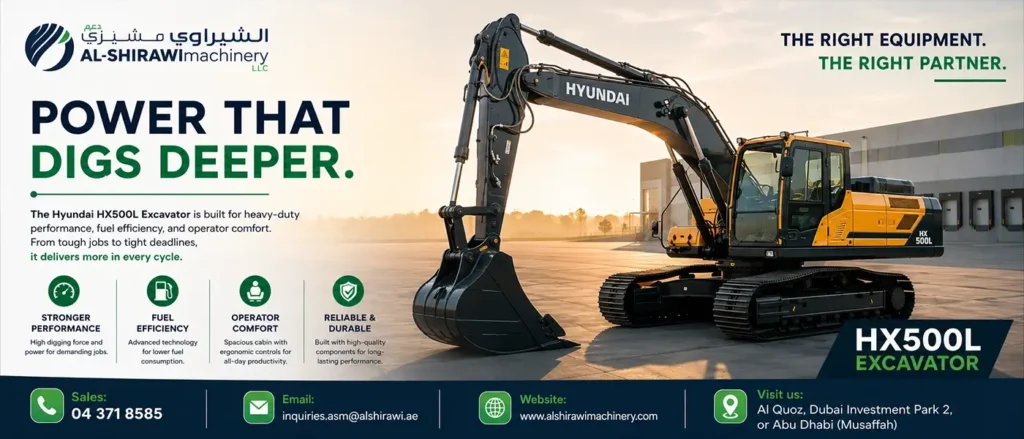
Before comparing brands or specifications, the first question is simpler: what job does this machine need to do, and how often?
Buyers frequently oversize or undersize their equipment because they’re planning for a single project rather than a working life. A wheel loader chosen for one large earthmoving contract may sit underused once that job wraps up, while a mini excavator bought for tight urban sites might struggle the moment a larger foundation job comes along.
Matching the machine to real, ongoing demand, not just the current contract, is what determines whether it earns its cost or becomes dead weight on the balance sheet.
Excavators aren’t interchangeable, and this is where a lot of buyers get caught out. Each configuration is built for a different working environment.
| Excavator Type | Best Suited For | Key Advantage |
| Crawler Excavator | Rough, uneven or soft terrain; heavy digging and demolition | Superior stability and digging force |
| Wheeled Excavator | Urban sites, road work, frequent relocation between sites | Faster mobility, no low-loader needed |
| Mini Excavator | Confined spaces, utility trenching, landscaping, residential sites | Manoeuvrability and reduced ground disturbance |
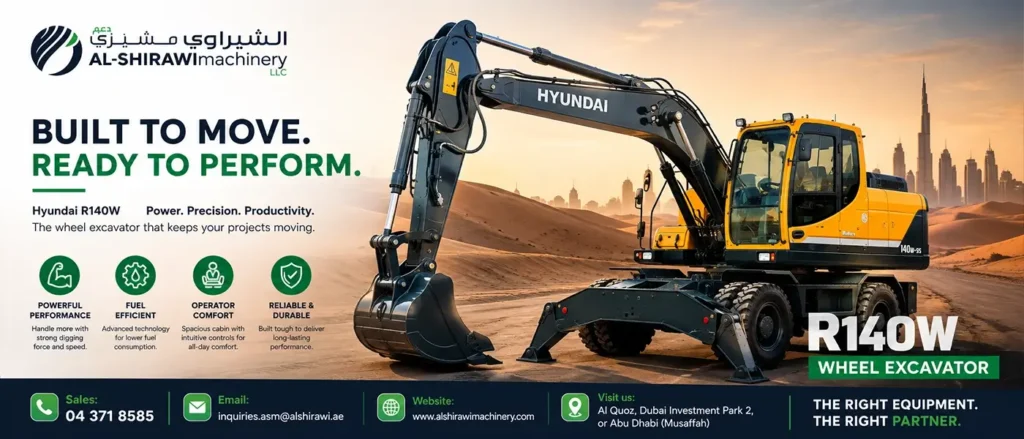
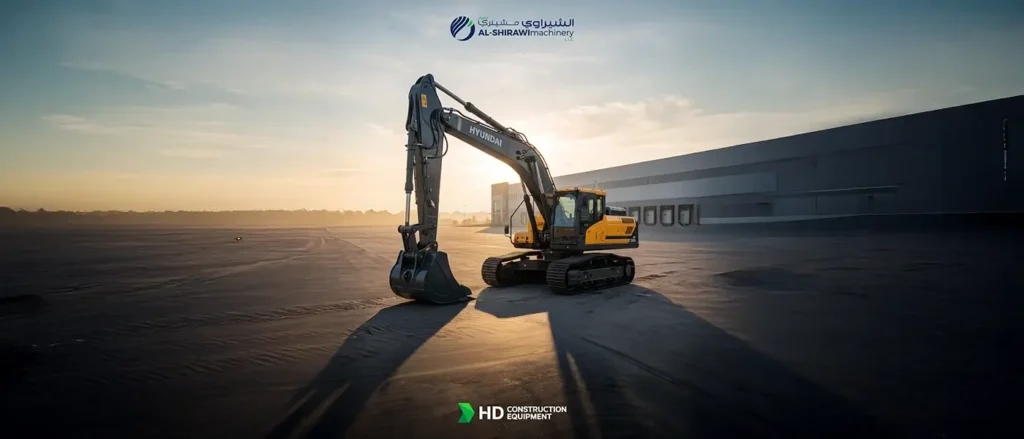
A crawler excavator is generally the stronger choice for heavy-duty earthmoving and demolition work where the ground is unpredictable, since the tracked undercarriage distributes weight and holds traction where wheels would struggle. A wheeled excavator, by contrast, makes more sense for contractors moving frequently between road or utility sites in built-up areas, where speed and road legality matter as much as digging power.
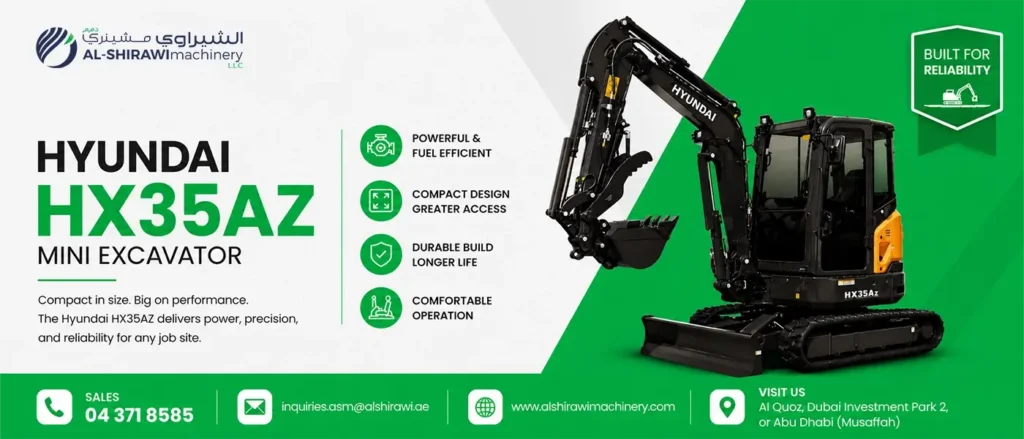
For tighter jobs; utility repairs, small-scale landscaping, or sites with limited access, a mini excavator offers the manoeuvrability larger machines simply can’t match, without sacrificing the hydraulic performance needed for genuine productivity.
The mistake to avoid is buying based on brand familiarity rather than site conditions. The best excavator for a colleague’s project isn’t necessarily the right one for yours.
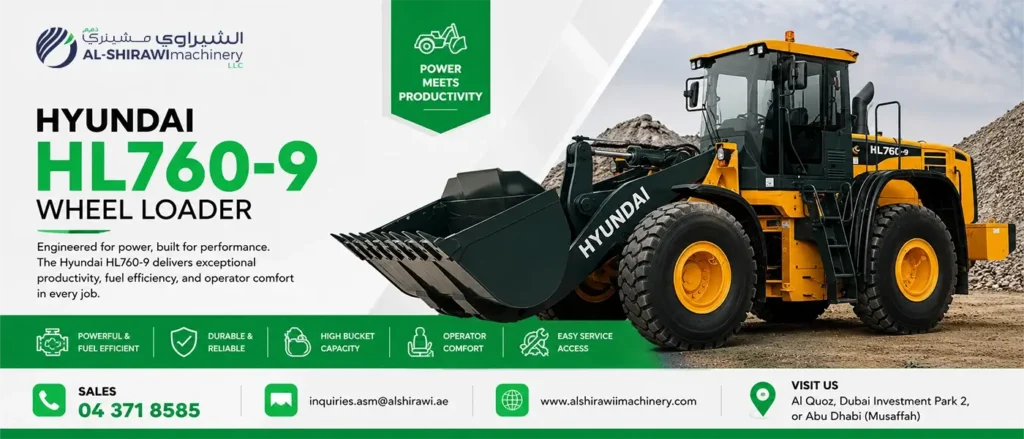
Wheel loaders are often judged purely on bucket size, which is a reasonable starting point but not the full picture. Engine power, hydraulic response, and breakout force all determine how efficiently a loader actually moves material over a full shift, not just how much it can lift in a single pass.
A wheel loader sized correctly for the application reduces cycle times and fuel consumption simultaneously, because the operator isn’t overworking an underpowered machine or wasting capacity on an oversized one. Under sizing is the more common error in the UAE market, where buyers try to save on upfront cost only to find productivity drops and operating hours climb.
Practical tip: Calculate loader sizing against your typical material density and daily volume targets, not just the largest single load you might occasionally need to move.
This is where most buying decisions go wrong. Purchase price is visible and easy to compare. Total cost of ownership is not, and it’s the number that actually determines whether an investment pays off.
A machine that costs less initially but requires frequent repairs, runs on non-genuine parts of inconsistent quality, or has poor local support can end up far more expensive than a slightly pricier alternative backed by a strong dealer network. This is precisely why after-sales infrastructure deserves as much scrutiny as the machine’s specifications.
Heavy equipment doesn’t fail on a convenient schedule. When a machine goes down on an active site, every hour of downtime has a direct cost; idle crews, delayed milestones, and sometimes contractual penalties.
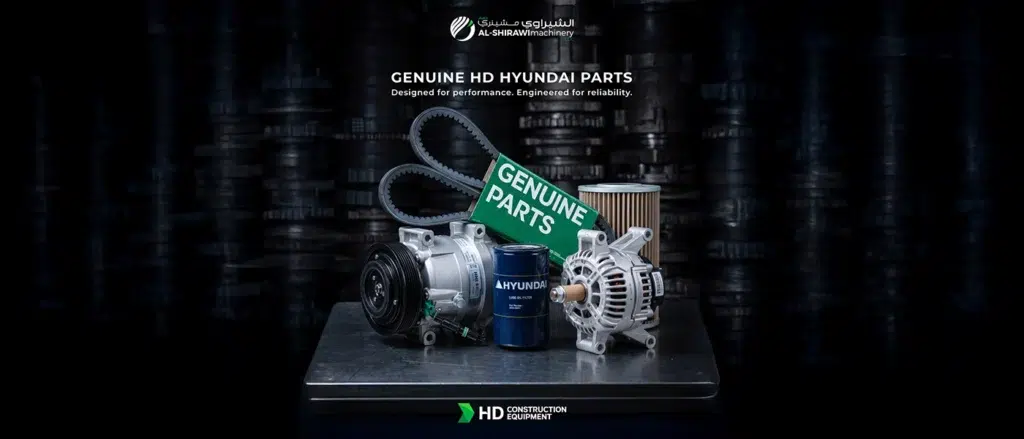
Al Shirawi Machinery’s after-sales structure exists precisely to answer these questions with certainty rather than promises. Genuine Hyundai spare parts, structured maintenance contracts, and a responsive service network mean equipment downtime is minimised and the machine’s resale value is protected, since a well-maintained history matters enormously when it comes time to sell or trade in.
A few patterns show up again and again in the UAE construction sector:
Each of these is avoidable with the right questions asked upfront, and each one directly affects the return on investment over the equipment’s working life.
Before finalising any heavy equipment purchase, run through this checklist:
If any of these can’t be answered confidently, it’s worth pausing before signing.
Heavy equipment investment isn’t a single decision, it’s a chain of smaller ones: the right machine type for the job, realistic sizing, genuine parts, and a service partner who shows up when it matters. Get those right, and the equipment becomes a productivity asset for years. Get them wrong, and even a well-built machine can turn into a liability.
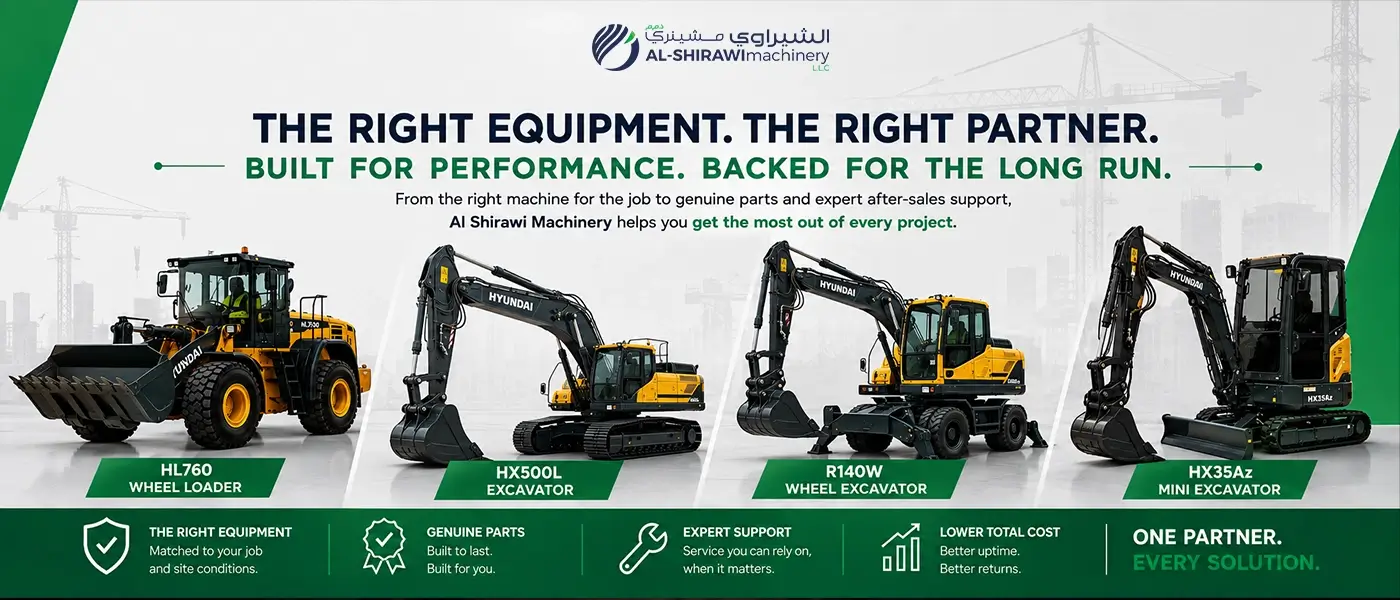
Al Shirawi Machinery works with contractors across the UAE to specify the right Hyundai heavy equipment for the job at hand, backed by genuine spare parts, structured maintenance contracts and a responsive after-sales team. Whether the requirement is a crawler excavator for heavy earthmoving, a wheeled excavator for urban mobility, a wheel loader for high-volume material handling, or a mini excavator for confined-site work, getting the specification right from the outset is what protects the investment long after the purchase is made.
Choosing the Right Equipment
With expert advice and support from Al Shirawi Machinery, the authorised Hyundai Construction Equipment dealer in the UAE, you can make a more informed equipment decision. Our team can help you assess your requirements and identify the right Hyundai machine for the job.
Need advice on choosing the right Hyundai equipment?
Sales: 04 371 8585 | inquiries.asm@alshirawi.ae
Website: www.alshirawimachinery.com
Visit us: Al Quoz, Dubai Investment Park 2, or Abu Dhabi (Musaffah)
A crawler excavator runs on tracks, giving it better stability and traction on rough or uneven terrain, making it suited to heavy digging and demolition. A wheeled excavator runs on tyres, offering faster mobility between sites and better suitability for urban or paved environments.
Base the decision on typical material density, daily volume requirements and cycle time targets rather than the single largest load you might occasionally handle. Undersizing hurts productivity; oversizing wastes fuel and capital.
Yes, for the right application. Mini excavators are built for confined spaces, utility work and landscaping where manoeuvrability matters more than raw digging depth. They’re not a substitute for a full-size excavator on large earthmoving projects.
Non-genuine parts can affect performance, safety and warranty validity, and often fail sooner. Local availability of genuine parts also directly reduces downtime when a repair is needed.
In most cases, yes. Scheduled maintenance catches issues before they become expensive failures, extends the machine’s working life, and protects resale value, often making the contract cheaper than reactive repairs over time.
Beyond the direct repair cost, downtime idles crews, delays project milestones and can trigger contractual penalties. This is why response time and local parts stock matter as much as the machine’s specifications.
It depends on utilisation needs and budget, but buyers should apply the same total-cost-of-ownership thinking to used equipment, checking maintenance history, remaining component life and parts availability just as carefully as with a new purchase.

Share your requirement — our team will reach out shortly.

