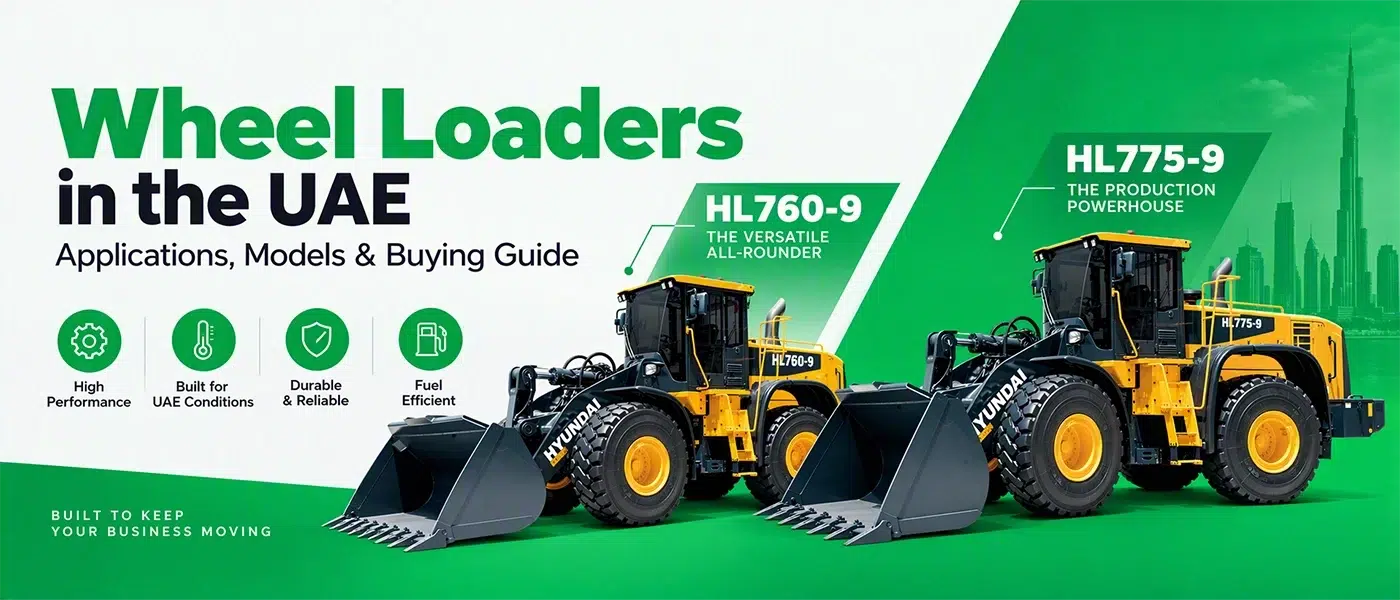
A quarry supervisor in Ras Al Khaimah once told a colleague that his worst day wasn’t a breakdown. It was a loader that worked perfectly but was one size too small. Trucks queued, the crusher waited, and every shift ended with the same shortfall.
That is the quiet cost of choosing the wrong wheel loader. The machine runs, but it never quite matches the job. This guide helps you avoid that by covering where wheel loaders earn their keep in the UAE, how Hyundai’s HL760-9 and HL775-9 differ, and what to check before you buy.
A wheel loader is a wheeled, articulated machine with a front bucket, built to scoop, carry and load loose material such as sand, aggregate, soil, stone and waste. In the UAE you’ll also hear it called a pay loader, payloader or shovel. They all mean the same thing.
It differs from an excavator in one way. An excavator digs and a loader moves. If most of your day involves loading trucks, feeding hoppers or stockpiling, you want a loader.
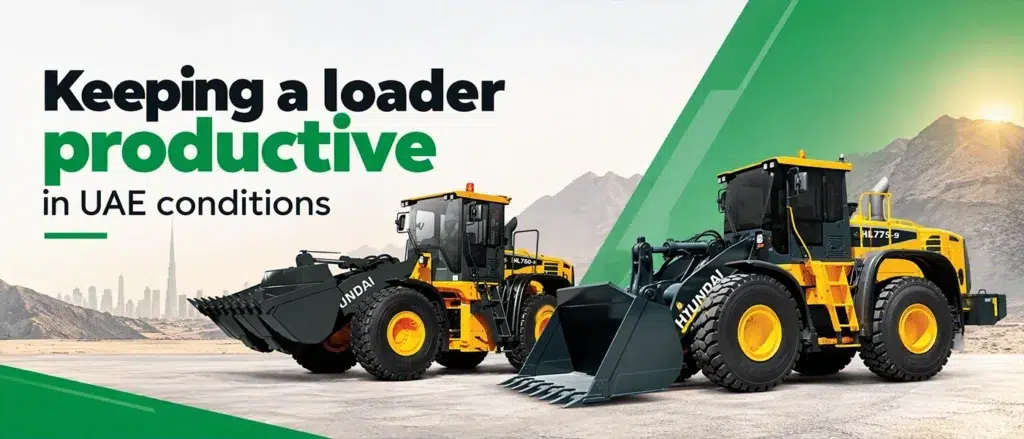
The work decides the machine, so start with what you’ll move and how far.
| Application | What the loader does | Why size matters |
| Quarrying and aggregates | Loads blasted rock, gravel and crushed stone into trucks and crushers | Bucket capacity and breakout force decide cycle output |
| Construction and road works | Site clearing, loading spoil, feeding material to crews | Manoeuvrability on tight, busy sites |
| Ready-mix plants | Feeds sand and aggregate to batching bins | Steady, reliable cycles matter more than raw power |
| Waste management | Pushes, lifts and loads at landfills and recycling yards | Durability against abrasive, mixed material |
| Ports and bulk handling | Moves bulk cargo and stockpiles | Higher capacity and reach for repeated loading |
Hyundai wheel loaders are built for Middle East conditions, with strong cooling systems, high torque under load and structures made to withstand abrasive material. Those matter in July, when ambient heat and dust punish any machine.
Al Shirawi Machinery supplies two Hyundai wheel loaders. Here are the published specifications side by side.
| HL760-9 | HL775-9 | |
| Rated power | 160 kW at 2,100 rpm | 335 hp at 2,100 rpm |
| Operating weight | 17.9 tonnes | 24.6 tonnes |
| Bucket capacity | 3.3 m³ | 4.5 m³ |
| Best suited to | Construction, aggregate handling, waste management, site clearing | Quarrying, construction, port operations, bulk material handling |
At 17.9 tonnes with a 3.3 m³ bucket, it suits contractors who switch between site clearing, loading and aggregate handling. It’s also easier to move between sites and cheaper to run than a larger machine.
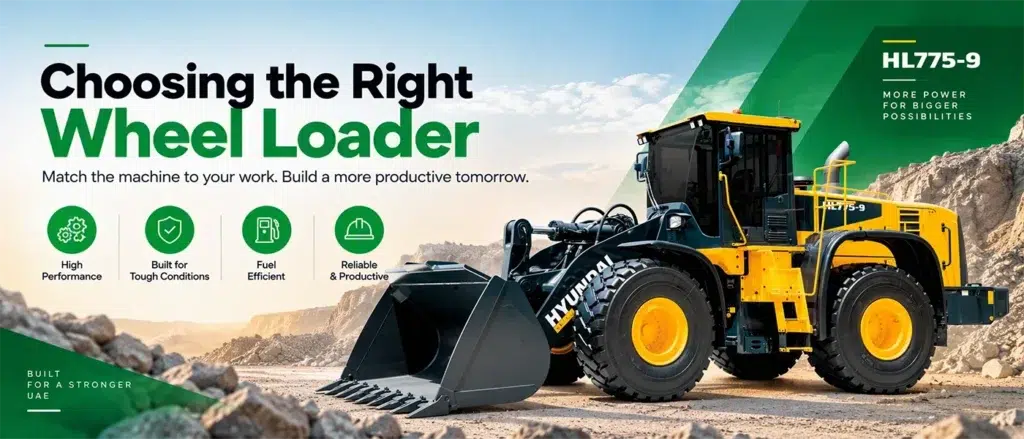
It sits in the mid-to-large category. The extra bucket volume and weight make it the better choice for quarries, ports and any operation where you load the same trucks all day. Hyundai positions it around productivity, operator comfort and fuel-saving efficiency.
A rule of thumb many fleet managers use is to match the bucket to the truck so you fill it in a small number of passes, commonly three to five. Fewer passes mean shorter cycles. Too many mean the loader is the bottleneck. If you tell your dealer which trucks you load, they can run this check for you.
You’ll get a better suited machine and more realistic price if you can answer these first.
Published prices rarely tell the full story, which is why you’ll struggle to find a reliable ‘wheel loader price in UAE’ figure online. Here is what moves the number:
If you want a loader for sale quickly, ask for a written quote that lists exactly what’s included. It’s the only way to compare like for like.
Buying on bucket size alone. Breakout force, hydraulics and tyre choice matter just as much on rocky or uneven ground.
Ignoring operator comfort. Hyundai’s ergonomic cabins, adjustable seats and clear visibility aren’t extras. Tired operators load slower and make more mistakes in long shifts.
Treating the cheapest quote as the best. A lower price from a supplier without local parts stock can cost far more once the machine sits idle.
Skipping the service conversation. Many buyers only ask about servicing after a breakdown. Ask first.
Buying the biggest machine “just in case”. An oversized loader burns more fuel and struggles in confined sites. Match it to the work you do most often. Our wider guide on choosing the right construction equipment walks through this same sizing logic for other machine types.
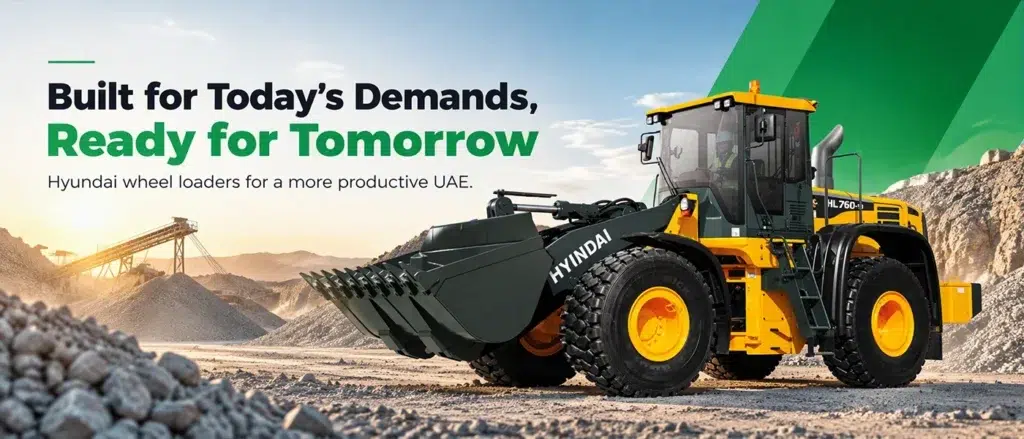
Buying the machine is the start. Heat, dust and abrasive materials shorten the life of a loader that isn’t looked after, so the support behind it matters.
Three things protect your investment:
Your next step
If you’re comparing options, start with the work, not the brochure. Tell the team what you load, into what, and for how many hours a week. They can then recommend the right Hyundai wheel loader and set out your support options.
As the official Hyundai equipment supplier and wheel loader dealer in the UAE, Al Shirawi Machinery can help with purchase, financing, rental, genuine spare parts and after-sales service.
- Sales: 04 371 8585, inquiries.asm@alshirawi.ae (Monday to Friday, 8am to 6pm)
- After sales: toll-free 800HDH-800434, asm.service@alshirawi.ae (Monday to Friday, 8am to 6pm; Saturday, 8am to 5pm)
- Online: request a quote at alshirawimachinery.com/hyundai-wheel-loaders
It loads, carries and stockpiles loose material such as aggregate, sand, soil and waste. In the UAE it’s common in quarrying, construction, ready-mix plants, ports and waste management.
Yes. “Pay loader” and “payloader” are common informal names for a wheel loader. Some people also say “shovel”, which means the same machine.
Neither is better in general. The HL760-9 (17.9 tonnes, 3.3 m³ bucket) suits mixed construction and aggregate work. The HL775-9 (24.6 tonnes, 4.5 m³ bucket) suits high-volume quarry, port and bulk handling.
It depends on the model, attachments, purchase method and support package. Ask a dealer for a written quote so you can compare like for like.
Yes. Al Shirawi Machinery offers flexible purchase, financing and leasing options, plus equipment rental for shorter projects.
Yes, if they’re built for it. Hyundai wheel loaders use reinforced frames, advanced hydraulics and durable tyres for uneven, rocky terrain.
It isn’t compulsory, but it’s usually worth it for machines working long hours in heat and dust. Scheduled servicing reduces unplanned downtime.

Share your requirement — our team will reach out shortly.

